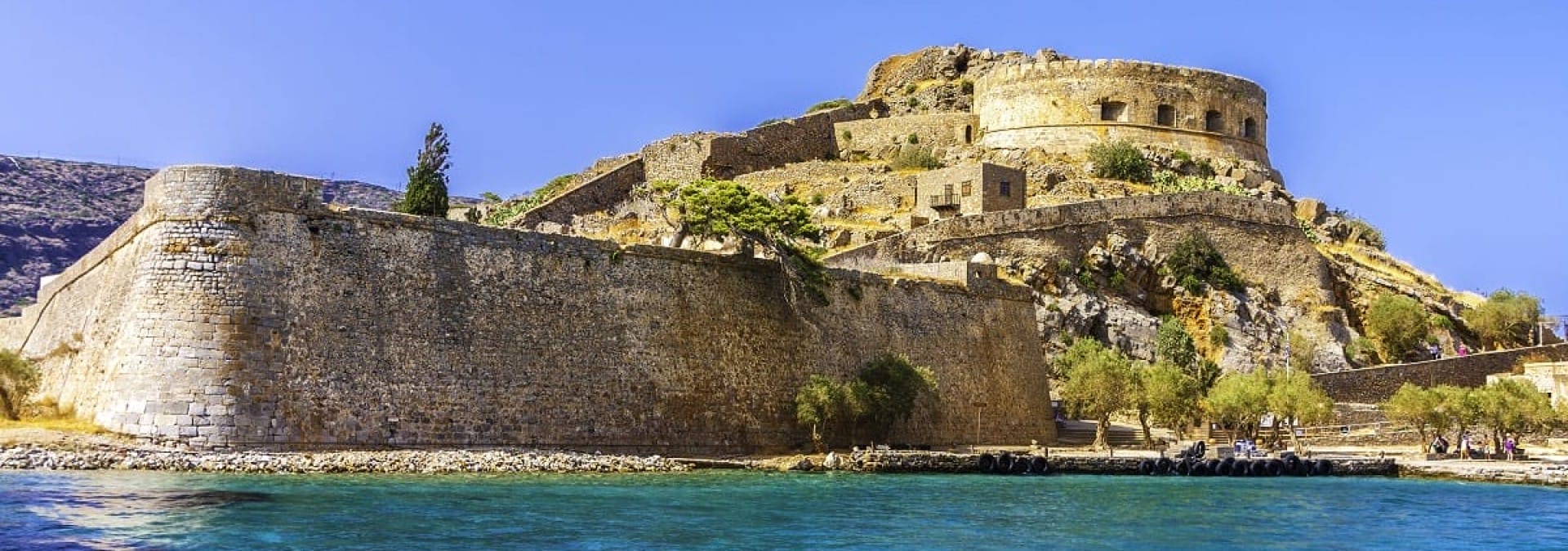
Spinalonga: The Island of the Living Dead and its Historical Journey
Explore the captivating history of Spinalonga, from its Venetian fortress and Ottoman era to its legacy as Europe's last leper colony and a world-renowned landmark in Crete.
Spinalonga, the small yet iconic island at the entrance of the Elounda lagoon in the Gulf of Mirabello, constitutes one of Greece's most poignant archaeological sites. With a history spanning from antiquity to the 20th century, the island has served as a Venetian fortress, an Ottoman settlement, and, most famously, Europe’s last leper colony.
Strategic Importance and the Venetian Fortress
In antiquity, the island was named Kalydonia and hosted the fortress of the Olountians to protect Ancient Olous (today’s submerged Elounda). The Venetians renamed it Spina-Longa (long thorn) and in 1579 began constructing an impregnable fortress. Their goal was to control the harbor and protect the region’s valuable salt pans from the Ottomans and pirates.
Despite the fall of Crete in 1669, Spinalonga remained under Venetian rule until 1715, serving as a refuge for rebels (chainides). Subsequently, it passed into Ottoman hands, evolving into a flourishing fortified town of merchants and sailors.
The Leper Colony Period (1903-1957)
The darkest and most moving chapter was written in 1903, when the Cretan State transformed the island into a place of isolation for Hansen’s disease patients. Hundreds of people with leprosy were brought there, initially experiencing absolute destitution.
However, the patients themselves managed to create an organized society. Led by Epameinondas Remoundakis, conditions improved: houses were built, and a hospital, cinema, and cafes were established. During the Axis Occupation, the island remained inaccessible to the Germans due to the fear of the disease, allowing patients to operate secret radios and receive news from London.
Spinalonga Today: Tourism and Culture
Following the discovery of antibiotics in 1957, the island was deserted, only to be reborn in the 1970s as a tourist destination. The novel "The Island" by Victoria Hislop and the subsequent television series catapulted its fame globally. Today, Spinalonga receives over 300,000 visitors annually and is a candidate for the UNESCO World Heritage List.