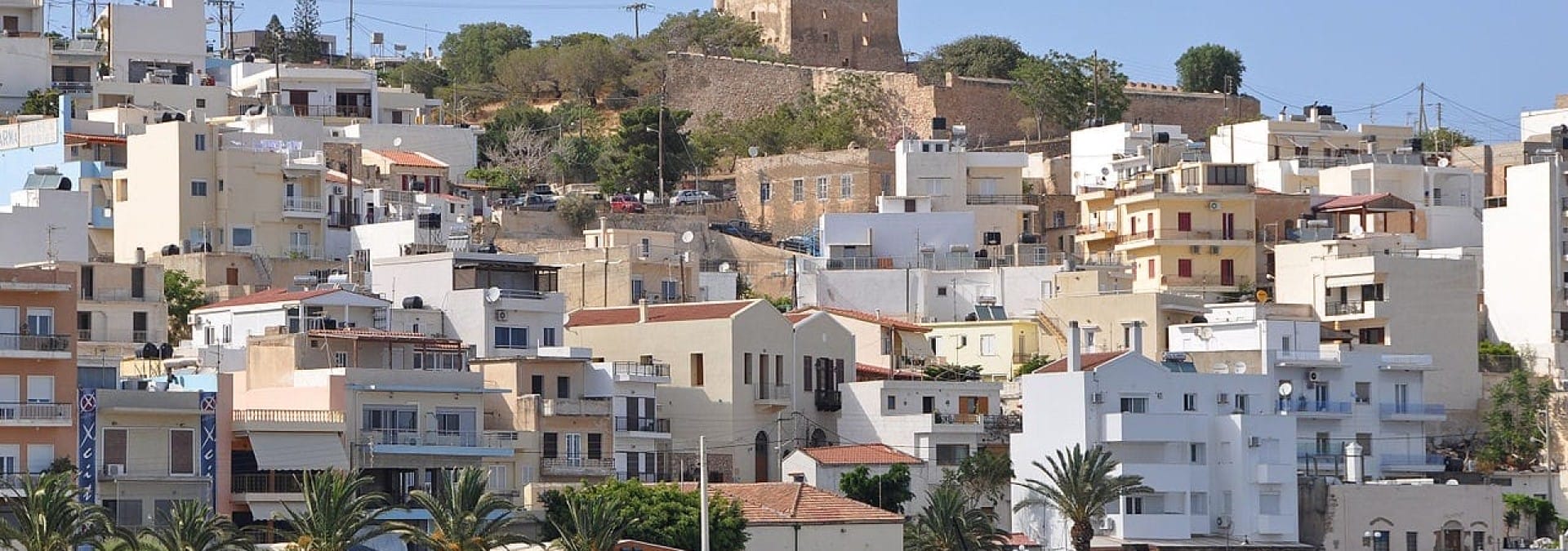
Sitia: The Radiant Harbor of Eastern Crete
Discover Sitia, the historic city of Eastern Crete. From the home of the sage Myson and poet Vitsentzos Kornaros to its pirate raids and modern rebirth.
Sitia, the easternmost city of Crete, is a place that uniquely balances the serenity of a traditional maritime town with the pulse of modern, cosmopolitan life. Built amphitheatrically along its namesake bay, with a population exceeding 11,000 residents, it serves as a peaceful sanctuary and the starting point for exploring its 45 provincial villages, where Cretan hospitality remains untainted.
The Origin of the Name and Antiquity
The name of the city is lost in the depths of time. It likely originates from the ancient city of Etis (or Etia), the homeland of Myson, one of the Seven Sages of antiquity. Other theories link it to the prehistoric city SE-TO-I-JA mentioned in Linear B tablets.
Although archaeological excavations at Petras and the surrounding areas have brought to light significant Minoan and Roman findings, the exact identification of the ancient city remains a fascinating enigma awaiting its final answer.
The Venetian "Golden Age" and the Catastrophes
During the Venetian rule, Sitia experienced great prosperity. In 1232, the Senate of Venice referred to it as the "Great Station and Light of the Island." However, its course was marked by dramatic events:
- Revolutions: The people of Sitia participated actively in every uprising against the Venetians, culminating in a clash at the harbor described by the poet Francesco Petrarch.
- Natural Disasters: The terrible earthquake of 1508 leveled a large part of the city.
- Piracy: In 1538, the notorious pirate Hayreddin Barbarossa desolated the coastline and destroyed the "Borgo" (the district outside the walls), causing irreparable damage.
Abandonment and Two Centuries of "Silence"
Pressure from the Ottomans led the Venetian administration to the decision to evacuate the city in 1648. The residents bid a desperate farewell to their homes, a drama sung with heartbreak by the poet Marinos Bounialis. For approximately 200 years, Sitia remained a deserted place, filled with piles of ruins and a few oil warehouses, as described by 19th-century travelers.
The Renaissance: From "Avnie" to Modern Sitia
The new page of the city was written in 1870. The Governor-General Hussein Avni Pasha decided to rebuild the city upon the ruins of the old one, initially naming it "Avnie." The Greeks, however, continued to call it the Harbor of Sitia or simply Steia.
Over the decades, the city evolved rapidly:
- 1881: Just 570 residents began the new life of the city.
- 1911: The water supply from the springs of the village Zou gave the city new breath.
- Today: Sitia is one of the most important urban centers of Crete. Its economy, based on exceptional olive oil, raisins, and tourism, is combined with a rich intellectual movement.
The city that gave birth to Vitsentzos Kornaros, the poet of "Erotokritos," continues to be a "great station" of culture, inviting visitors to discover the archaeological treasures hidden in every corner of the Sitian land.