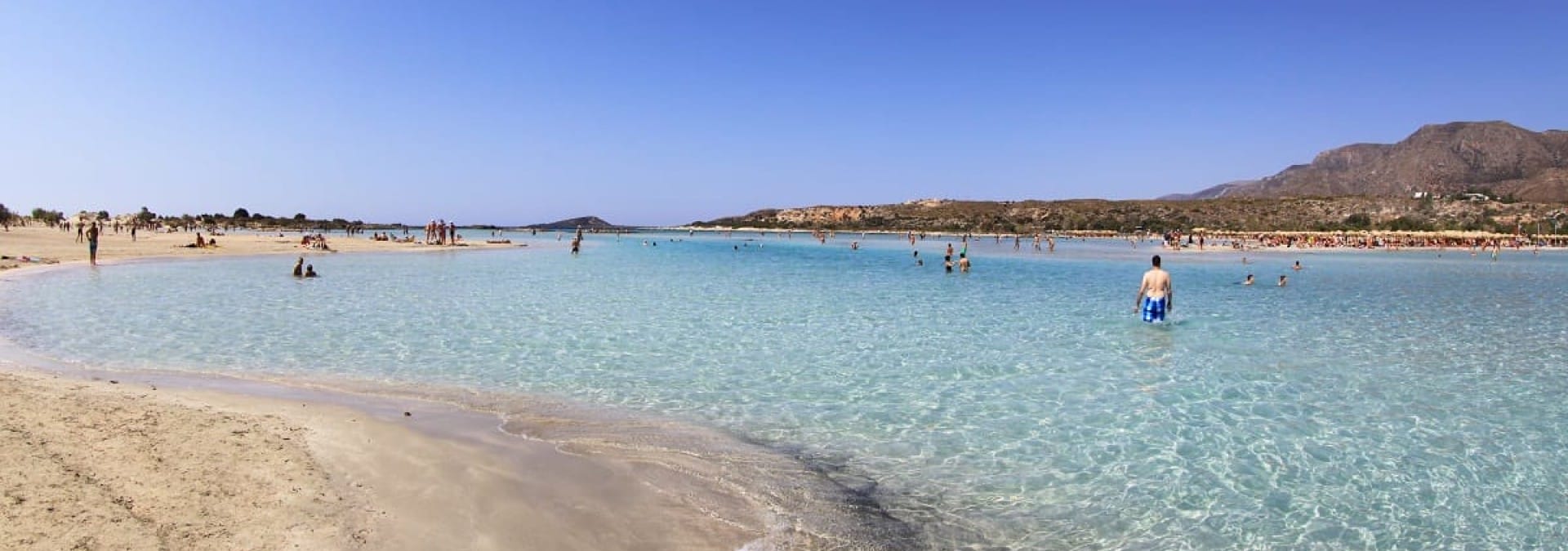
Elafonisi: An Exotic Paradise at the Edge of Crete
Discover the magical Elafonisi in Chania, the beach famous for its pink sand and turquoise waters. Learn about the Natura 2000 ecosystem, the pirate history of "Lafonisi," and the nearby Chrysoskalitissa Monastery.
Located at the southwesternmost tip of Crete, about 76km from Chania, Elafonisi is a destination that feels like it belongs in the Caribbean. It is a place of unparalleled beauty, integrated into the Natura 2000 network as one of Greece's most significant and sensitive ecosystems.
An Ecosystem of Rare Beauty
Elafonisi is famous for its white sand that, in many places, takes on a magical pink hue from millions of crushed sea shells. The crystal-clear turquoise waters form a shallow lagoon with warm, calm water, making it a perfect haven for families with children.
As a protected area, it hosts rare species of:
- Flora: White sea lilies that bloom in autumn and the endangered sea cedars.
- Fauna: It is a nesting ground for the Caretta-caretta sea turtle and various animals of the dunes.
- Note: To preserve this delicate balance, it is strictly forbidden to remove sand or plants from the area.
History and Myths: From Apollo to Pirates
The history of this land is deep and multi-layered. In antiquity, the island was known as the Musagores Islands. The ancient Greeks built a temple here dedicated to Apollo Musagetes (leader of the Muses), believing that the music of the Muses could soothe the wild seas of the region.
Regarding its name, local tradition offers a different explanation: the real name is Lafonisi, derived from "lafyra" (spoils/booty) that pirates used to hide on its shores. For centuries, the island served as a strategic pirate stronghold - who knows, perhaps a hidden treasure still lies beneath the dunes.
The Tragic Easter of 1824 and the "Imperatrix" Shipwreck
The landscape’s beauty also guards pages of sorrow. At the parking area and the chapel of Agia Irini, monuments stand to commemorate the massacre of 1824. During the Greek War of Independence, Ibrahim Pasha’s forces slaughtered 640 people (mostly women and children) who had hidden on the island. They were betrayed by a wandering donkey that crossed the shallow passage, revealing the secret path to the Ottoman troops.
Furthermore, on the edge of the island stands a lighthouse built in 1939. This became necessary following the tragic shipwreck of the Austrian liner Imperatrix in 1907, where 38 people lost their lives and were buried on the island.
Visiting and Sightseeing
- Exploring the Island: It is worth the 20-minute walk across the island, through dunes and quiet coves, to reach the chapel of Agia Irini and enjoy the endless sea view.
- Organization: The eastern mainland side is organized with umbrellas, showers, and snack bars, while the beaches on the island itself offer more seclusion and natural beauty.
- Chrysoskalitissa Monastery: Just 5km north, this fortress-like monastery stands atop a rock. Look for the "golden step" which, according to legend, can only be seen by those with true faith.